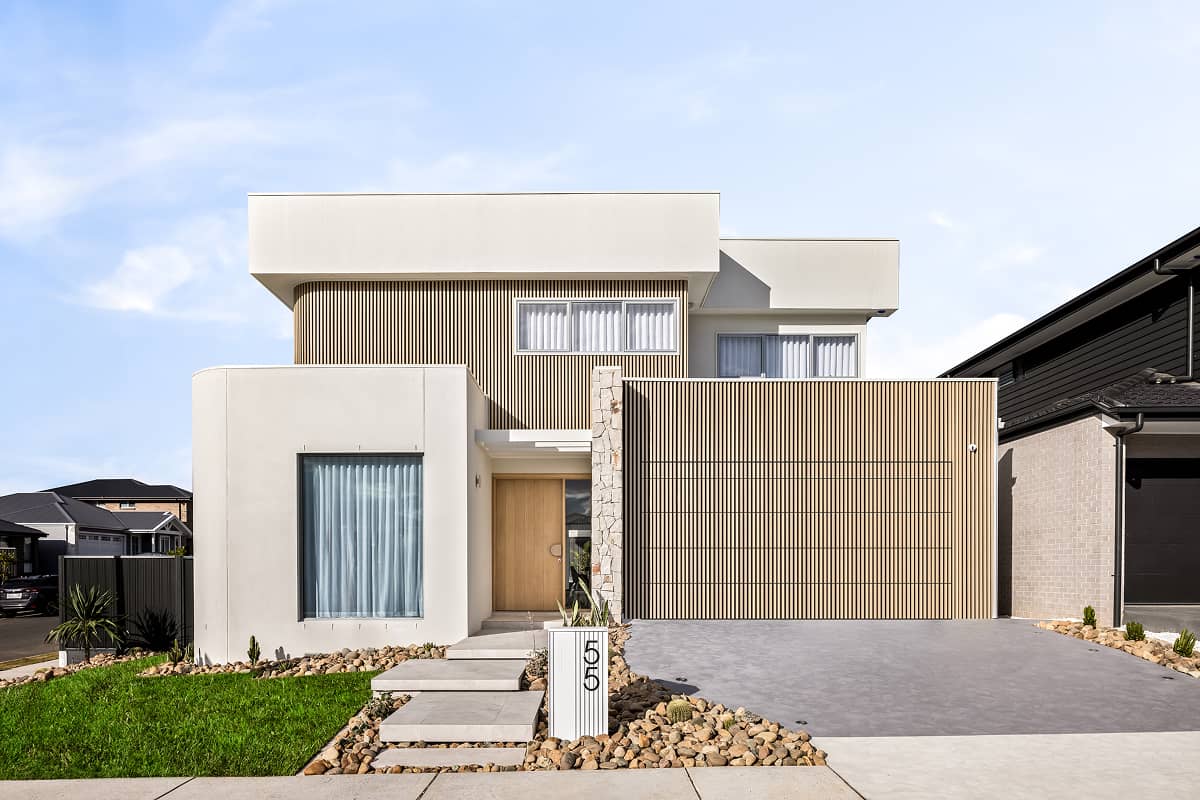

If you’re looking to buy a sloping site, you’ve likely come across a range of home designs. But did you know that split level homes can be the most effective and sustainable way to build on an unlevel site? Learn more about the benefits, challenges and costs of building a split level home.
What Is a Split Level Home?
Split level houses are commonly built on sloping or uneven blocks of land. This style of home is designed to work with the natural layout of the land and often will have multiple levels of living spaces to accommodate for this.
Split level homes first became popular in the 1950s and have seen a bit of a resurgence in the last few years due to the type of land readily available for purchase in Australia.
Designing a Split Level Home
Before buying a split level block, it is essential that buyers understand what goes into designing and building on a slope. Many people buy sloping sites without understanding the complexity of building on a slope compared to a standard flat piece of land, which can lead to more challenges during construction.
While many buyers have some previous ideas of how they would like the house to look or function, it is vital that any alterations to a design always works with the site. This ensures that to build is cost-effective and makes the most of the existing landscape.
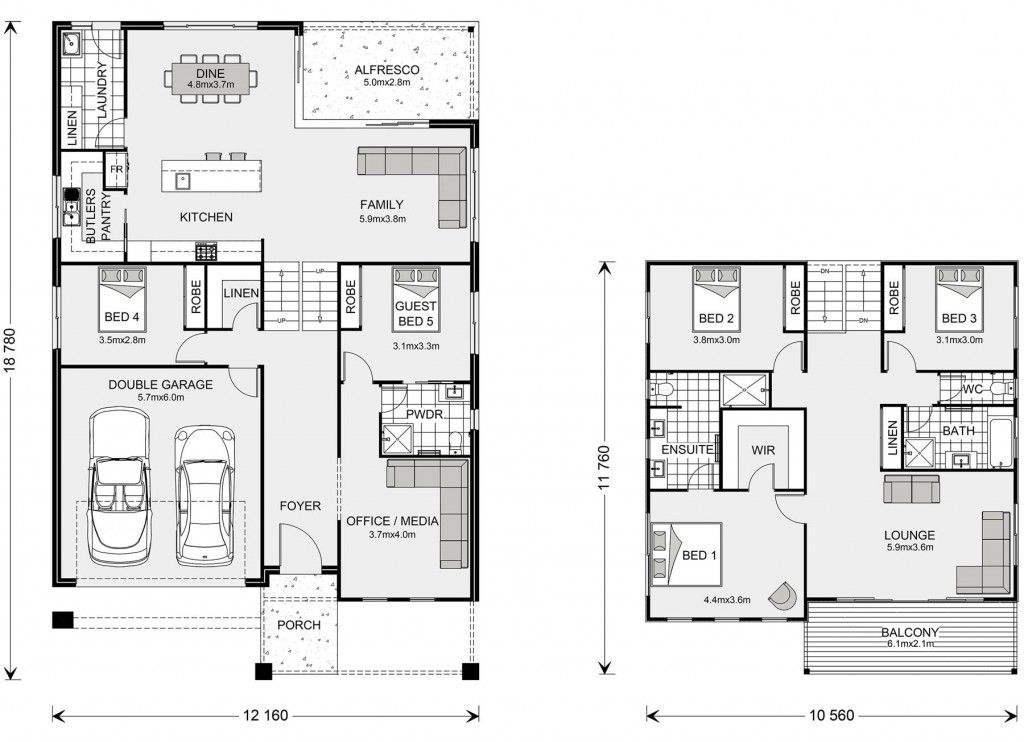
Most builders will likely have to improvise a lot of the design based on the slope’s layout to ensure that the house will sit correctly. Once a builder or designer can view the site and the slope in person, they can better understand the complexities of the build and can provide home plans that suit that specific site.
Choosing a design that best fits with the exiting site enables builders to minimise the impact of the build on the land and maximise the overall amenity of the site.Ultimately,designing a home around a site’s slope often means that the buyers end up with a much nicer place that is more sustainable, more functional to live in, and more cost-effective to build.
What Are the Benefits of a Split Level Design?

There are many benefits of building a split level home on a sloping block, including sustainability, aesthetics, space utilisation and better views.
Here at G.J. Gardner Homes, we recommend building a split level home on a sloping block to minimise the site’s earthwork. Split level homes are a much more sustainable way to build a home on a sloping site, as you can reduce the amount of earth that needs to be moved compared to building a flat level home on an uneven site.
Split level homes can also be much more aesthetically pleasing than flat level homes as they fit naturally into the surrounding environment.
What Are the Challenges of Building a Split Level Home?
The biggest challenge of building a split level home is the site and the slope itself. The more that the site is changed or altered, the more challenging the build will be. Working with the natural landscape can help minimise any challenges of building a split level home.
Is Building a Split Level Home More Expensive?
When people decide whether to build a split-level home or a flat-level home, the most frequently asked questions are “what costs more?”. Like the design of a split level home, it varies on a case by case basis. The cost of a split level build depends on various factors, including the home’s actual design and the slope of the land.
Per square meter, building a split level home can be more expensive to build because of structural issues and the splitting of the land. On the other hand, it can also be cheaper than building a flat house on a sloping site. Often, starting with a design that doesn’t work for the site can cost buyers an extra $100,000.
While some people try and build a flat level home on any site because the initial costing is cheaper, excavating the land on a slope to flatten out the land, putting in retaining walls, and other additional features like drains can dramatically increase the cost of the build.
Ultimately, building a house that minimises changing the land structure and works with the slope will be cheaper than excavating and building despite the slope.
Want to know more? Check out our range of split level home designs or get in touch today!
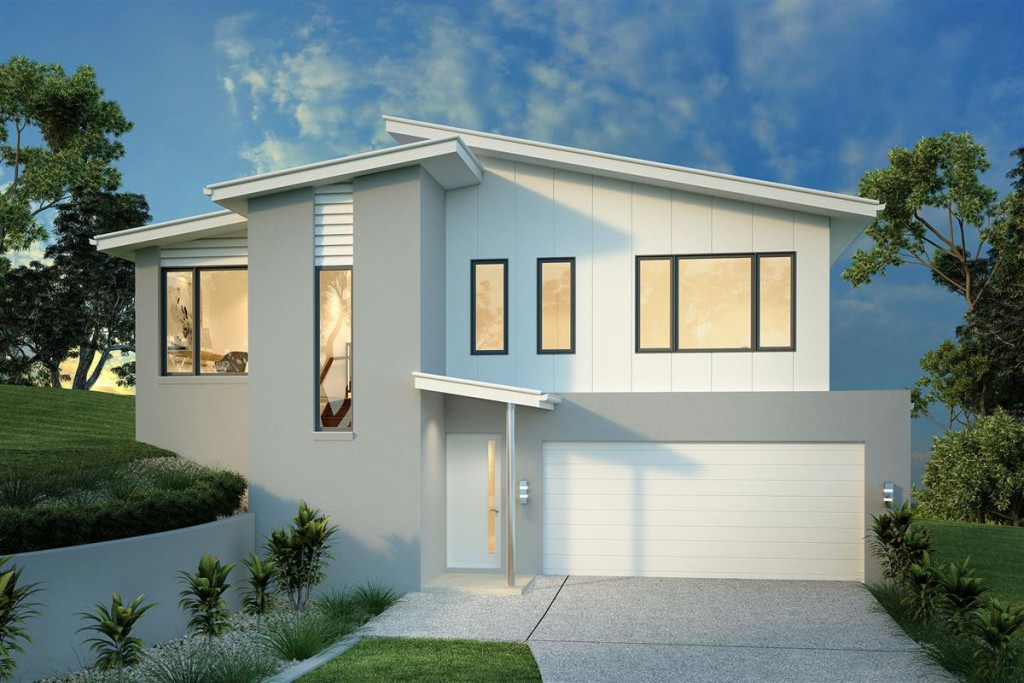 Regatta |  Seaview | 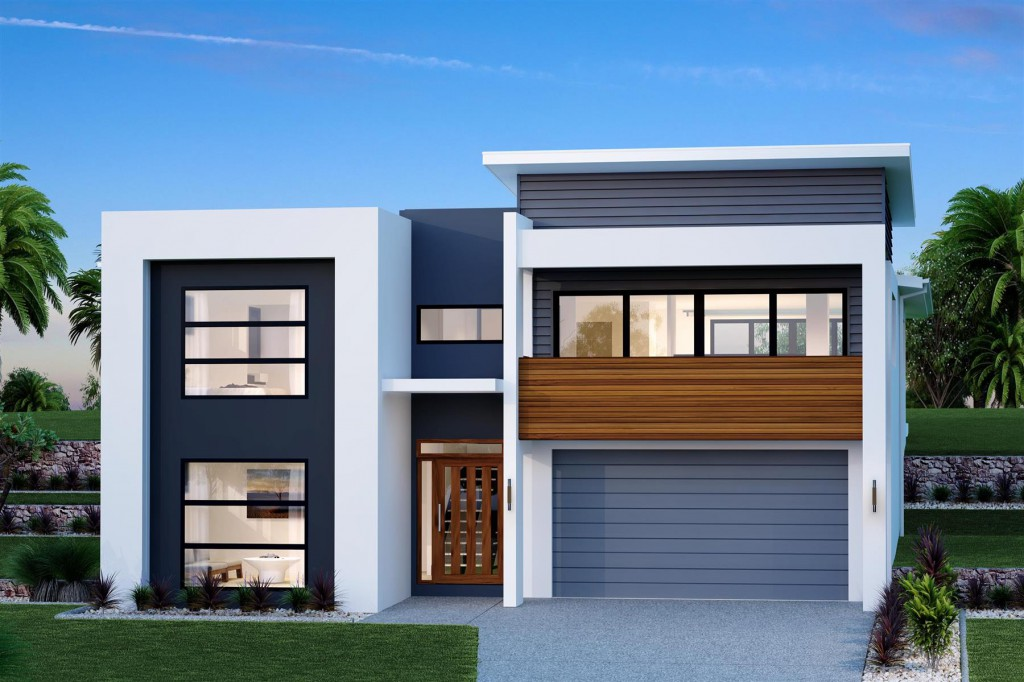 Stamford |
Category
Choosing your Home
Inspired by this post? Get curated home design advice delivered to you.
Related articles
Category
Choosing your Home
Victorian homes are synonymous with the Victorian architectural style. They were once known for their heritage homesteads with ornate facades,…
Category
Choosing your Home
A floorplan is one of the most important considerations for investors when building a new property. After all it impacts…
Category
Choosing your Home
In the Australian housing market, townhouses offer a unique path to home ownership. With two dwellings under one roof, this…
Category
Choosing your Home
Since the purpose of an investment property is the return, building a new property gives you the opportunity to maximise…
Category
Choosing your Home
The Queensland climate, conditions and culture offer an exciting opportunity for home builders to create a beautiful and spacious home….
Category
Choosing your Home
From space going unused to the time spent upkeeping, bigger definitely doesn’t always mean better when it comes to your…
Category
Choosing your Home
Family tends to be one of the top priorities of home buyers, and it’s important to find a home that…
Category
Choosing your Home
G.J. Gardner Homes is dedicated to making your dream home a reality. But it can be a challenge to even…
Category
Choosing your Home
From pop culture to politics and even ways of life, America has remained the epicentre of trendsetting for generations. It’s…
Category
Choosing your Home
As many homebuilders will tell you, location is everything when it comes to building. The right spot will decide your…
Category
Choosing your Home
G.J. Gardner Homes’ design approach extends to every part of the home, from the final touches to finding the right…
Category
Choosing your Home
In the unprecedented times we’re experiencing, designing a home able to support lifestyle changes for yourself and your family is…
Category
Choosing your Home
Should you build a single or double-storey home? At the beginning of any new homebuyers’ journey, the decision on whether…
Category
Choosing your Home
Let’s start with what you’re probably thinking: what even is a house and land package? House and land packages combine…
Category
Choosing your Home
Rear garage house plans are home designs usually built on narrow lots that have the garage and driveway accessible at…
Category
Choosing your Home
This type of dual dwelling is classified into two categories; attached and detached. Attached dual occupancies are two dwellings on…
Category
Choosing your Home
Thinking of downsizing your home? When it comes to houses, bigger isn’t always better. There are many reasons why people…
Category
Choosing your Home
Finding the right block isn’t always straightforward – size, shape and location are just some of the things you’ll need to consider. In this post, we examine what to look for when buying a block of land.
Category
Choosing your Home
Dual occupancies, duplexes and granny flats are becoming increasingly popular as blocks of land become more expensive and less abundant in Australia. Read on to find out how they differ.
Category
Choosing your Home
Don’t be narrow minded when it comes to a narrow block of land! Despite the smaller space, the design approach can be bigger and better. Read more!
Contact Us
"*" indicates required fields